
Use Cases
Real-world deployments of Vision AI, LLM, and RAG technologies.
Working with partners across industries.








Vision AI Factory Automation with Scale-Display OCR
A smart factory automation project for a major enterprise. Vision AI reads images of on-site scale displays and sends the results automatically to the manufacturing execution system (MES).
An OCR model was built for seven-segment scale displays. Mobile and server environments were benchmarked to secure operational stability and system scalability.
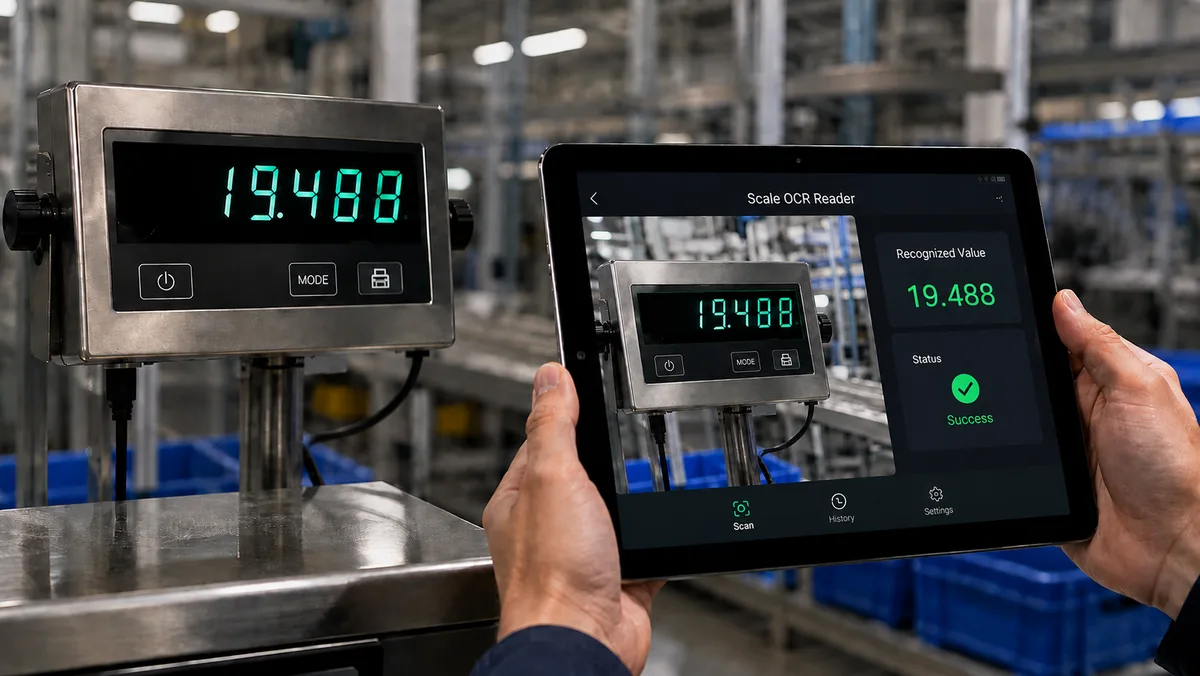
※ For security reasons, this is a reconstructed sample screen, not an actual production interface.
OCR accuracy improved from about 40% to 99.6%.
Solved seven-segment recognition by combining PaddleOCR and YOLO.
Built MES-integrated OCR automation while retaining the existing server environment.
- Retrained PaddleOCR on real-world scale-display images and improved digit-region detection
- Improved seven-segment OCR accuracy from about 40% to 99.6%
- Optimized the mobile OCR model through NCNN and Job-format conversion
- Identified model limitations and defined the scope of server-side migration for production deployment
- Converted the PC-trained model to run with ONNX in server environments
- Validated the development environment and expanded deployment options for Java servers
- Combined the ONNX model with RapidOCR for server-embedded digit recognition
- Implemented OCR automation without new AI infrastructure or major system changes
Plugin-Based AI Design Copilot
An AI design copilot project for a major enterprise. Given a PRD, the LLM creates screen specifications that follow design system rules. It then places components on the design canvas and validates the result automatically.
RAG-based evidence retrieval reduces repetitive design work and supports structured review. The resulting generative AI operating model addresses security, accuracy, and completeness.
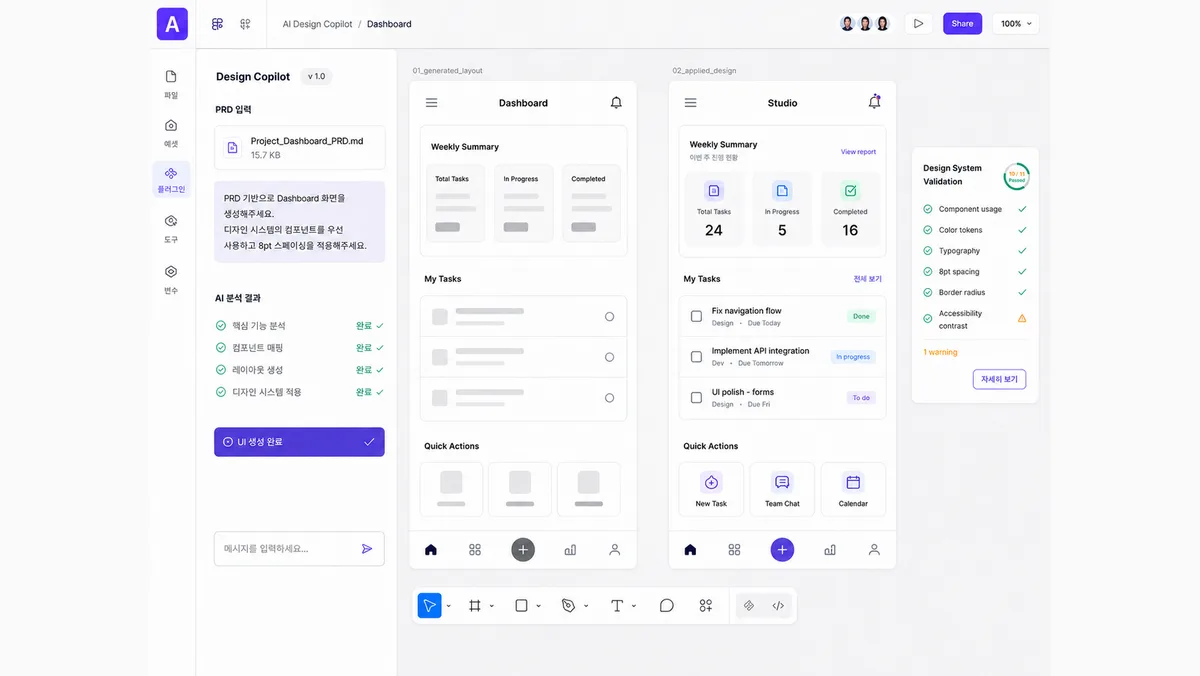
※ For security reasons, this is a reconstructed sample screen, not an actual production interface.
Automated PRD analysis, screen design, and component placement.
Applied component and design-token standards consistently.
Built a hybrid AI architecture that adapts to security levels and operating conditions.
- Connected required components, tokens, and rules to real-time vector search
- Improved classification accuracy against the official design system while reducing token costs
- Generated screen specifications and component trees in predefined data formats
- Mapped components and design tokens reliably through a consistent output structure
- Switched models automatically between cloud and on-premises environments based on security level
- Maintained service continuity by switching to a fallback model during outages
- Checked five areas, including accessibility, token compliance, and text errors
- Used HITL review for exceptions to balance speed and reliability
AI-Powered UX Writing Quality Management Platform
An AI language quality management platform for a major enterprise. It helps apply consistent terminology and tone across UX copy throughout the company's services.
RAG retrieves approved language and standard terminology as supporting evidence. The LLM then recommends copy revisions and English translations based on those standards.
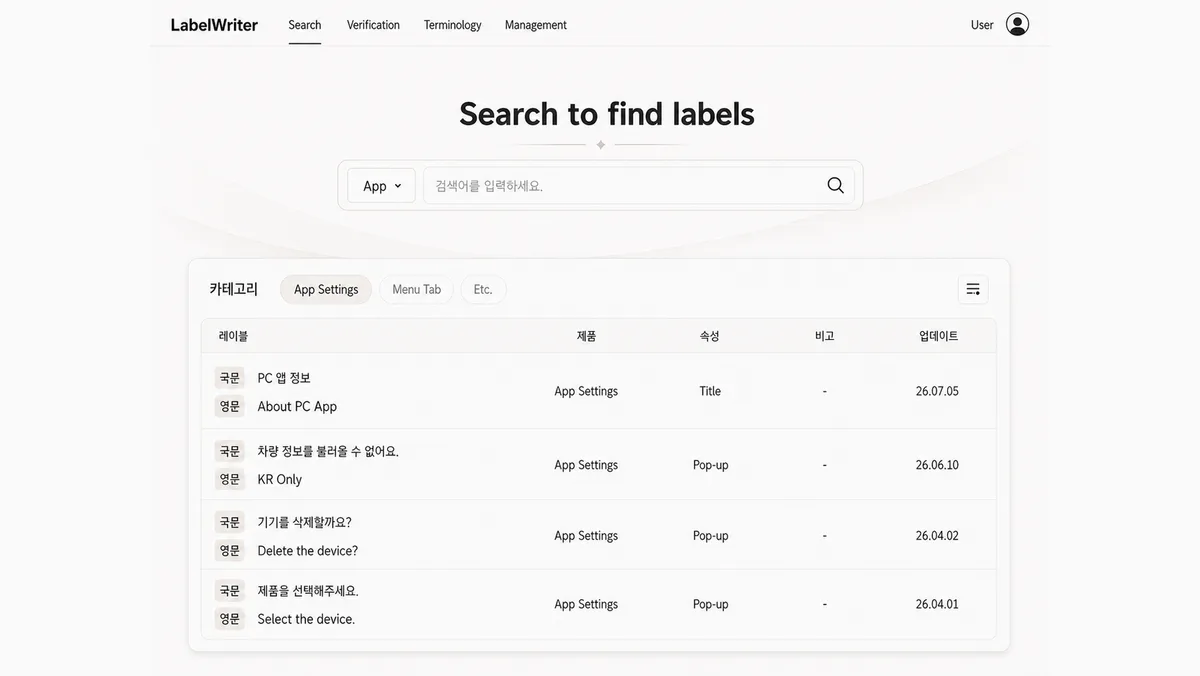
※ For security reasons, this is a reconstructed sample screen, not an actual production interface.
Unified UX copy search, copy review, and English translation approval.
Strengthened brand-language consistency using standard terms and approved examples.
Created a simple structure for storing approved copy as reusable knowledge.
- Searched style-guide terminology and recent approval history in real time
- Improved accuracy and consistency through exact-term matching and recent-example retrieval
- Generated revision reasons and evidence-based results in standardized JSON
- Created a stable structure for reviewer confirmation and downstream system integration
- Combined vector search and BM25 results with AI reranking
- Prioritized exact matches and improved accuracy when expanding the search scope
- Applied automatic fallback to the existing database when RAG retrieval was unavailable
- Sent exceptions for human review and final approval, then added them to Translation Memory
DEJAY ONE
Transforming spaces into business growth.